Fondi di Baia WAVE Living Lab 2022: Difference between revisions
Jump to navigation
Jump to search
| Line 98: | Line 98: | ||
<gallery caption=" " widths="200px" heights="150px" perrow="5"> | <gallery caption=" " widths="200px" heights="150px" perrow="5"> | ||
File: | File:Castello di baia e il verde intorno.jpg|''Countryside all around the Castle '' | ||
File:yourcase_water_space2.jpg|''add a caption'' | File:yourcase_water_space2.jpg|''add a caption'' | ||
File:yourcase_water_space3.jpg|''add a caption'' | File:yourcase_water_space3.jpg|''add a caption'' | ||
Revision as of 14:55, 15 April 2022
>>>back to working groups overview
| Area | Fondi di Baia | |
| Place | Bacoli | |
| Country | Italy | |
| Topics | Water and Heritage | |
| Authors | Cavallo_Landulfo_Limmatola_Sorrentino | |

| ||
Rationale
- Why do you think this case is relevant? What is your hypothesis considering the landscape challenges?
- Format: 3-4 sentences
Location and scope
You can edit this map with the map editor
Water as a natural system
Geomorphology, typologies and dynamics of water areas
- Describe the water areas of your area in the contxt of the wider water system
- How does water appear in the landscape of your living lab? What types of water areas are common?
- Please identify the water bodies' catchment areas, tributaries and floodplains
- Which dynamics do these water areas have?
- Have there been any flood events in the past?
- add 2-3 graphical representations to the image gallery, you can add more if you like
- try to use drawings that express the system dynamics
-
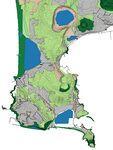 The lake sistem of the Phlegraean area generated by craters of volcanoes
 -
 Craters of the extinct volcanoes in the Phlegraean area, filled with water or with vegetation
 -
 A mosaic of a submerged Roman villa due to dradyseism of the area
 -
 Study of the constraints and risks


Water as a living space
- Which habitats can be found in and along the water areas of your area?
- How is the water quality in your water areas?
- Which areas are still natural, which are urbanized/artificial?
-
 Biodiversity of the Baia Area
 -
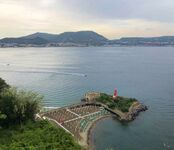 How this area is used by the population but preserving their natural characteristics


Blue and Green Infrastructure
- What are the major potential elements of a green/blue infrastructure network? Are these likely to change/disappear? Why is that?
- You find my background material on green infrastructure in our reading list
- add 1-2 graphical representations to the image gallery, you can add more if you like
-
 Graphical representations of the Green and Blue infrastructure of the area of Baia
 -
 Fondi di Baia farmhouse
 -
 Fondi di Baia natural park


Water as a cultural space
Land use and water
- map the land uses along your water areas: settlements, infrastructure, agriculture, resource extraction, natural areas, energy production...
- describe in particular the historical evolution of land use pattern, please make use of historical maps
- description evolution, status quo and driving forces, is the land use likely to change? Why is that? (approx 200 signs)
- add 1-2 graphical representations to the image gallery, you can add more if you like
-
 Historical picture of the Castle of Baia with its bay
 -
 Study of the land us subdivided in naturale and rural use
 -
 Study of the accesibility system with rail and road infrastructure


Cultural and spatial typologies of water areas
- The urban morphology of our area has never followed a regular path, it's characterized by a sort of widespread urbanization. Probably one of the attractive factors which brought to the first settlements, was the presence of the castle, centre of life during the Aragonese domain. Another important features may have been the presence of the seaside and the near port of Baia. This contributed to generate an economy mainly based on fishing but, thanks to the wide contryside, even based on agricolture. In addition to the sea, another type of water that is very present is the thermal water, very common in all the Phlegraean area
-
 Countryside all around the Castle
 -
add a caption
-
add a caption

Sacred spaces and heritage
- Which places/elements hold cultural value and to whom?
- You may add a map and some images, please also explain in your caption why these elements are valuable
-
 Cultural, historical and heritage interest areas
 -
 Castle of Baia
 -
 Monumental park of Baia


Visual appearance and landscape narrative
- Which elements are essential for the landscape character?
- Has the landscape been painted or otherwise depicted, when and whom? Which elements are essential?
- Which narratives exist? Who has written about this landscape or depicted it in some way?
- You can add text and images
-
 The Castle of Baia - Carlo Bonavia (1751-1788) oil painting on canvas
 -
 The bridge of Caligola and the gulf of Pozzuoli - Alessandro D'Anna (1743-1810) gouache
 -
 Castle of Baia's hill, 1930
_olio_su_tela.jpg)
_Gouache.jpg)

Water and People
Accessibility and usability
- Where are your water areas accessible, and where not? How strong are spatial obstacles preventing access?
- Who is using the spaces and how?
-
add a caption
-
add a caption
Community Mapping
What is to be mapped here?
- Social groups from within the community, for example the youth, kids, students, parents, the retired etc. Typically, these groups have specific needs, which you can also make explicit on the map. These people might not be organized in any way, but they are usually present in the context you are observing
- Local stakeholder groups: these groups are organized in one or the other way. They only exist within the community context you are observing. For example: the local community center, local churches, local interest groups, the landowners, small businesses and retailers
- External stakeholder groups are not necessarily present in the environment you are observing, but they may have strong stakes and interests. These can be local authorities, politicians, associations, care services etc.
- For each group, you may identify their needs, objectives, power and capacities
- You may also identify gaps and power conflicts
- Please try to redepict these elements in an integrated way and in relation to your water landscape. What is the relationship between these groups? Are they close or distanced from each other? Who is more powerful? Which voices are hardly heard? Do they have any shared concerns?
-
add a caption
-
add a caption
-
add a caption
Possible Futures
- You can summarize your findings with a SWOT diagram and a DPSI(R) Model
- Link back to the Sustainable Development Goals: Which goals are at risk?
- What is your worst case scenario for this landscape?
- What is your best case scenario for this landscape?
- Present your scenarios in the form of a collage or sketch
- Add text and visuals
-
explain your analysis briefly in the caption
-
explain your worst case scenario briefly in the caption
-
explain your best case scenario briefly in the caption
Collaborative Goal Setting
- Define strategic planning objectives based on the evaluation findings from your analysis
- Ideally, involve the community of your living labs into this process
- Link back to your original targets from section one and the Development Goals
- 150 words text contribution
Spatial Strategy and Transect
- translate your strategic goals into a vision
- develop a spatial translation of your vision
- exemplify your vision in the form of a transect with concrete interventions
- add map(s) and visualizations
-
add caption here
-
add caption here
-
add caption here
-
add caption here
From Theory of Change to Implementation
- For implementing your vision: Which partnerships are needed? Which governance model is required?
- Who needs to act and how? Draw and explain a change/process model/timeline
- Which resources are needed? On which assets can you build?
- add 150 words text and visuals
-
 add caption here
 -
 add caption here


References
- give a full list of the references you have used for your case
Process Reflection
- Reflect in your intercultural and interdisciplinary team on the outcomes of your study
- Which limitations were you facing?
- What have you learnt from each other?
- What did you learn in the Living Labs?
- What would you do differently next time?
- You can also use diagrams/visuals
- 250 words text